
The record has to hold up
A bid, RFI, submittal, change order, service ticket, time entry, or invoice should keep its files, status, owner, and history close to the work.
Build Daily exists because contractor work gets expensive when the record breaks: the bid loses its quote trail, the project loses the latest answer, the service ticket loses the part and signature, or the office cannot tell what is ready to bill.
The product is organized around the places contractors actually work: leads, estimates, projects, service tickets, dispatch, inventory, documents, files, time, manpower, CRM, analytics, support, and accounting direction that is being built in stages.
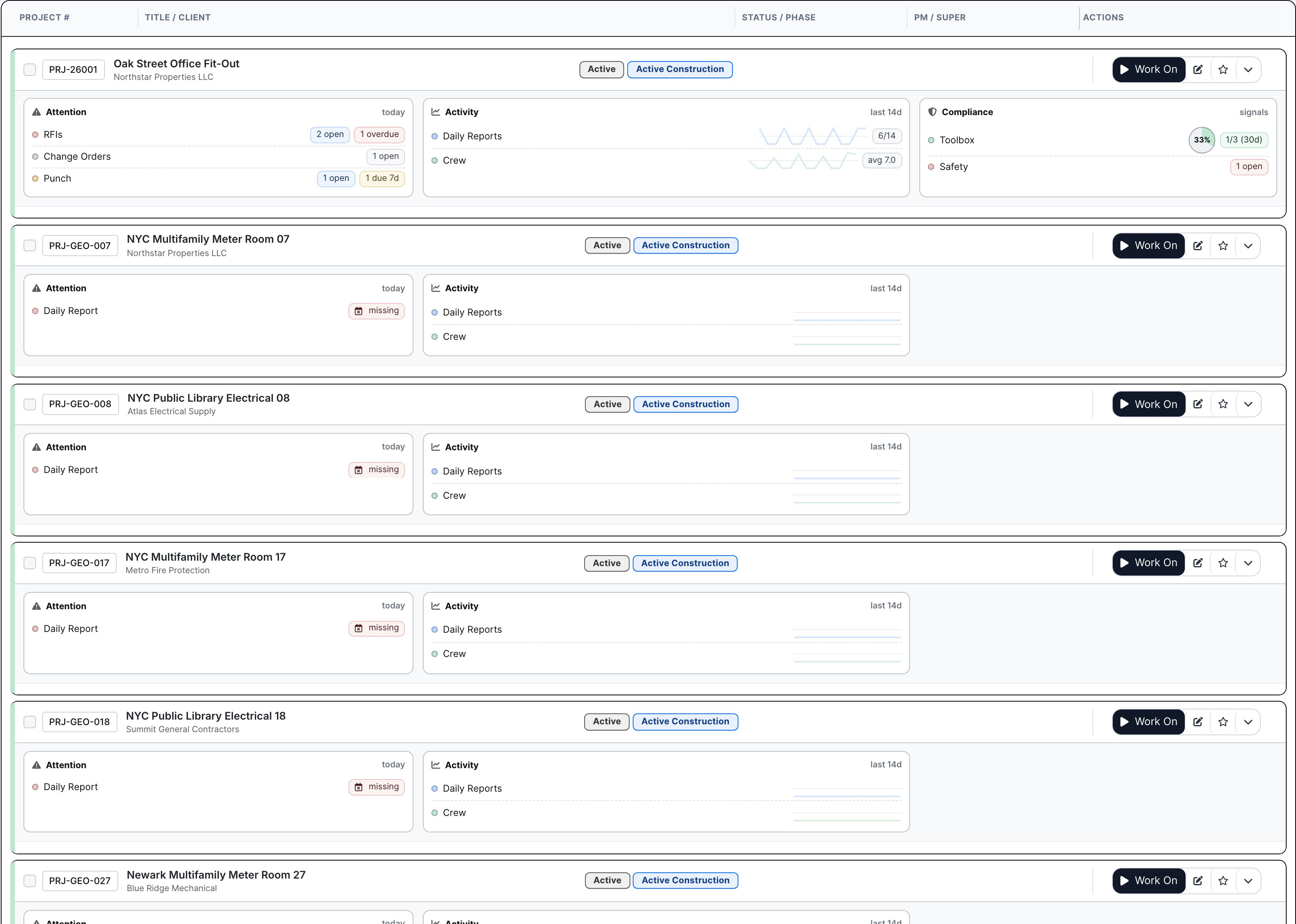
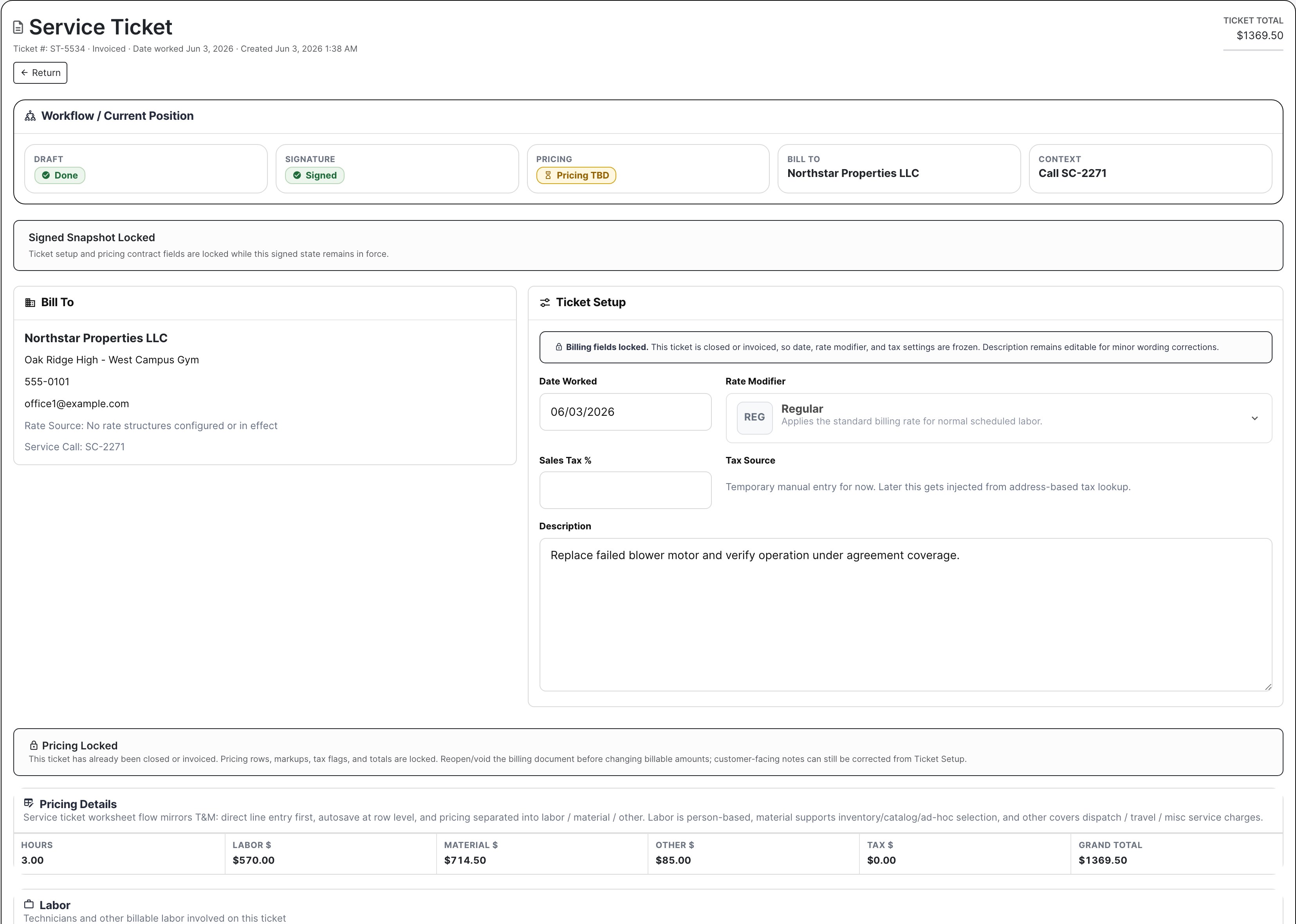
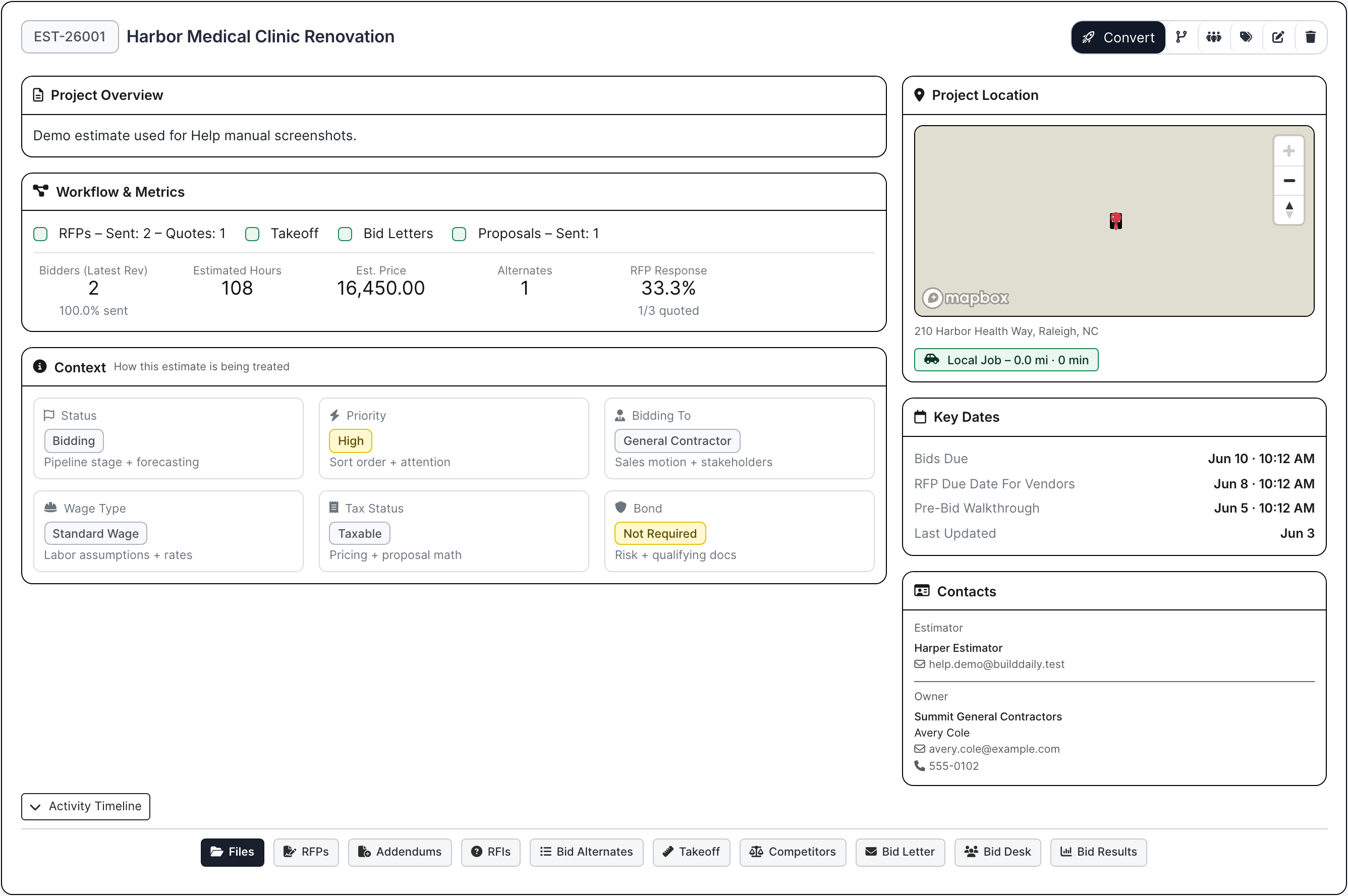
Most operational pain is not one missing feature. It is a broken chain between estimating, project management, field work, service, documents, time, and money.
A bid, RFI, submittal, change order, service ticket, time entry, or invoice should keep its files, status, owner, and history close to the work.
Good software should help a PM, dispatcher, estimator, tech, or billing user decide what needs attention without rebuilding the story from texts and inboxes.
Vendors, owners, reviewers, customers, and signers should get the right public link or portal workflow without receiving broad internal access.
| Contractor Question | How Build Daily Approaches It |
|---|---|
| What are we bidding, and who owes us a number? | Leads and estimates keep customer context, files, vendor RFPs, planroom links, addendums, RFIs, alternates, takeoff, proposals, competitors, and bid results together. |
| Which jobs need a call today? | Each project has its RFIs, submittals, files, drawings, specs, change orders, T&M tickets, field records, schedule, closeout, and team in one place. |
| What happened in the field? | Daily reports, manpower, timeclock, safety, toolbox talks, deliveries, lookahead work, punch, files, photos, and field notes stay tied to the job record. |
| What did the tech do, and can we bill it? | Service calls, dispatch, tickets, sites, equipment, agreements, labor, materials, signatures, billing review, invoice email, payment links, and payment history stay in one service trail. |
| Where is the backup? | Documents and files attach to the records that use them: estimates, projects, RFIs, submittals, change orders, service tickets, signing packets, support, and closeout. |
| What is stuck across the company? | Analytics, CRM, notifications, and Friday show the team what's gone stale, what's still open, and what needs attention. |
Every screen should tell you the work, who owns it, and what happens next. If it doesn't, we fix it.
A module page should explain how a contractor uses the screen to move work, not list internal view names or generic features.
Public pages should use real routes, real screenshots, and populated examples when a workflow is shown. Empty screenshots do not prove anything.
If something works, we say what it does. If it's still being built, we say so.
Quotes, signed tickets, approved change work, pay apps, invoices, payment links, inventory usage, and time all affect margin. The record should not lose that thread.
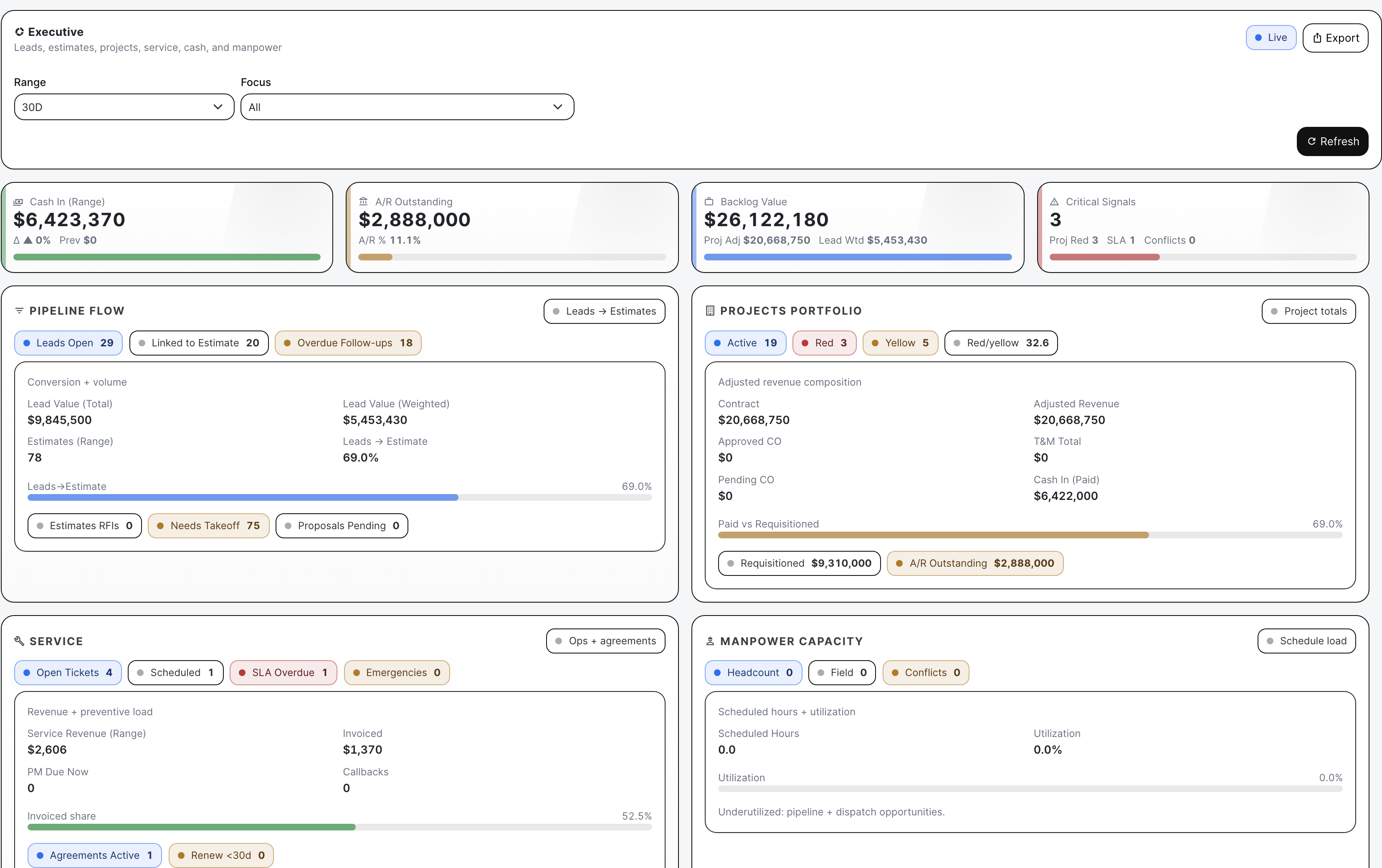
Bring the way your team actually works: bid intake, vendor quotes, job setup, RFI/submittal logs, extra work, daily reports, service calls, dispatch, technician tickets, inventory, time, and billing review.
The useful question is not whether Build Daily has a button called the right thing. The useful question is whether your team can open the record, understand the state of the work, and make the next decision without hunting through five other systems.
From first lead to final payment, the job should not depend on someone remembering which spreadsheet, inbox, folder, text thread, or portal has the truth.